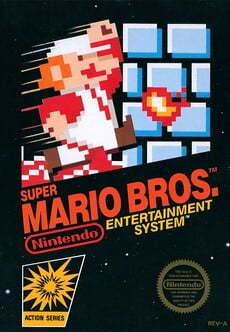
Welcome to my weekly series (I hope), when I made this blog I was contemplating what I should talk about for the first post. I figured I should just start with where it all started for me, not directly since I was not alive when this game came out but the effects of this particular title have been far reaching and can even be seen in games and media today. So this week’s feature is Super Mario Bros on the Nintendo Entertainment System, I present to you, Noteworthy Nonsense.
Founding of a Legacy
Super Mario Bros for the NES is a fixed point in time, a point that changed everything. Nobody knew it at the time, but no one’s lives would ever be the same. Created from the brains of Shigeru Miyamoto and the geniuses at Nintendo, this game was beautifully crafted with an approach that is seldom seen today. Everything that was on the screen when you started the game had a purpose, from the shape and size of the characters to the music and design of the levels themselves.
Gaming would never be the same after this. A few of the reasons why is that most games at this time were just home releases of popular Arcade games, which were designed to be black holes for the quarters in your little child pockets. No one in those days except for ‘that one friend’ that everyone had ever saw the end of the arcade games, if they even had an end. Games would just get faster and harder until you lost and put another quarter in to start all over.
This was the hurdle that games needed to get over with the advent of home game consoles, your game needed to be easy enough to play at the beginning, and get steadily harder, but not be so difficult that no one could see the end of the game they purchased. Take another game that was a staple in most American arcades, Pac-Man as a great example of a game that works in an arcade but doesn’t have the same magic at home. Pac-man was a game that you attempted to eat all the pellets on the screen without being caught by the little ghost guys that were hunting you. When you beat a level, the screen would flash and you get a rush of dopamine before the next level, which was the same map and same goal but faster until you hit a point where your child reflexes couldn’t keep up and you would be caught by the ghosts and lose. At an arcade, this works because you don’t have hours upon hours to play and the flashing lights entice other kids to look over and want to play. But at home you quickly realize that each level is the same and that repetition isn’t nearly as exciting over time. This is why the industry needed a change, and Super Mario Bros was that change.
World 1-1
What Super Mario Bros did that was genius, was the way that it taught the player new things without ever having a word appear on the screen. No pop up that said ‘Press A to Jump’, just pure context clues and visual.
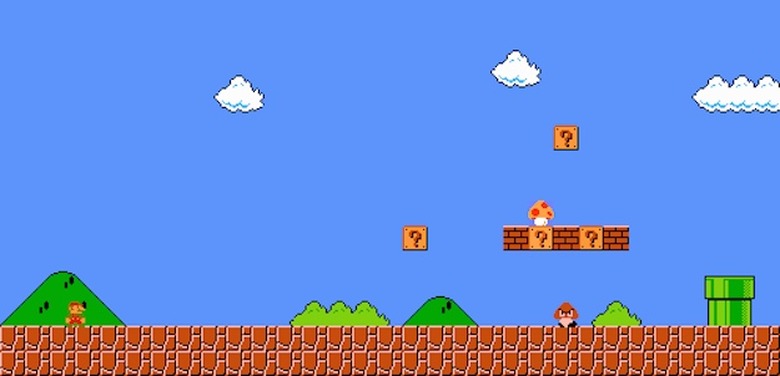
Looking at the image above, this is the first level of the game and immediately the game is teaching you. The question mark boxes are a magnet for curiosity, instantly having you wonder what wonders could be inside. The floating nature of the blocks tells you that there is verticality to the game, which at the time was not always a given, video game characters didn’t always have the ability to jump. The Mushroom had these inviting colors that also made you curious to its function, and when you touch it, Mario grows and you gain this feeling of being stronger. The Goomba as we know it to be called now, has a different vibe with is angry eyebrows, signifying that maybe you shouldn’t let him get you. This visual form of teaching continues throughout the level and every time something new is introduced, you the player learn something that you then apply to how you look and play the game.
Later on in the same level you encounter walls that made you hold the jump button when you tried to jump over it, therefore teaching you that if you hold the button, you go higher. You come across pits to the void, which you need to press the B button to sprint and gain momentum to clear the gap. Then you get to the end of the level, and you climb up a hill of blocks and see a flagpole, and I don’t know about you, but my first instinct is to get to the top of that. It is all meticulously designed to prepare you for what is to come next.
Playing with Perceptions
Another thing that is done is to the player is to make you feel different things based on the music that is being played, or even the environment of the level. The Underground levels have this music and atmosphere that makes it feel more claustrophobic, even though you have the same amount of room and constraints of the previous levels. The underwater levels have a sense of whimsy which is accentuated by the flowing music which I can always still hear in my head when things are quiet. The castle levels have this fast-paced music that urges you forward like something bad will happen if you take too long.
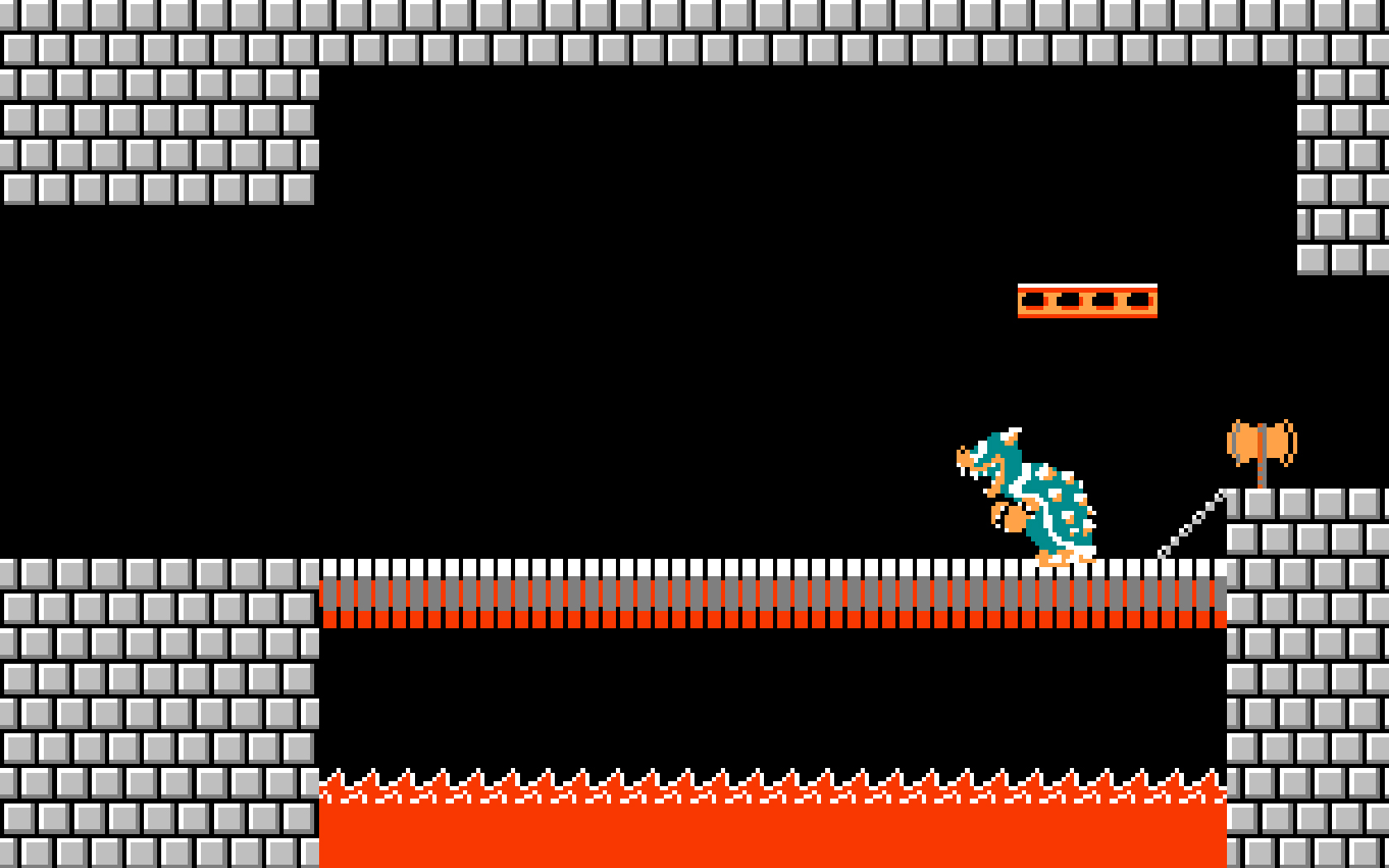
With no dialogue, Nintendo crafts a story with the castle levels. You have the music urging you forward, there is this oppressive atmosphere with a solid black background to put all your focus on the fire and lava and danger. Speaking of fire, all the while you have these fire blasts coming at you from further into the level, signifying something deeper inside that does not want you to complete your quest. After everything, you get to the end and are faced to face with the big Koopa himself, Bowser and find out that it was this guy who was shooting fire at you the whole time.
This kind of context storytelling is something that makes this special, but also laid the foundation for future games to not have to give you a mountain of text to explain that you want to defeat this big turtle guy. The game could have spent time explaining that he kidnapped the princess and wants to rule the Mushroom Kingdom with an iron fist, but nothing would have worked as well as what they did. Which was the reaction I had of “Hey, this guy has been shooting fireballs at me! I’m gonna get him”.
Let the Credits Roll
Thank you for taking the time to read my first post here, I really appreciate it. Even though I was not alive when this game first came out, the impact it had has enough weight that it should be acknowledged. May you have a blessed day and week and I look forward to seeing you on the next installment of Noteworthy Nonsense.


Leave a Reply